
Have you ever stood in a place where the ground beneath your feet holds centuries of sacrifice, rebellion, and unbreakable spirit? I have.
This is not your average day trip. This is not a tourist attraction dressed up in pretty packaging. Charles Town is a living, breathing Maroon community tucked into the lush green hills of Portland, Jamaica, and a visit here will change the way you see this island and the way you see yourself.
Who Are the Maroons? (And Why You Need to Know)
You cannot walk into Charles Town without understanding who the Maroons are and what they represent. So let me back up for a moment.
Hundreds of years ago, enslaved Africans were brought to Jamaica against their will, forced to work on sugar plantations under brutal, inhumane conditions. But some of them refused. They ran into the rugged, nearly impossible mountain terrain of Jamaica’s interior, and they built their own free communities. They grew their own food. They created their own system of governance. They developed military strategies so effective, so deeply rooted in their knowledge of the land, that the most powerful empire in the world could not defeat them.
The British tried. Repeatedly. And they failed.
Eventually, the British Empire had no choice but to sit down and sign a peace treaty, legally recognizing the Maroons’ freedom and their right to govern themselves. This happened before slavery was officially abolished in Jamaica. Let that sink in. They won their freedom through sheer will, strategy, and courage, under the banner of a motto that said everything: Freedom or Death.
That is the history living in Charles Town, Portland. And when you arrive, you feel every word of it.
Meeting Captain Padam
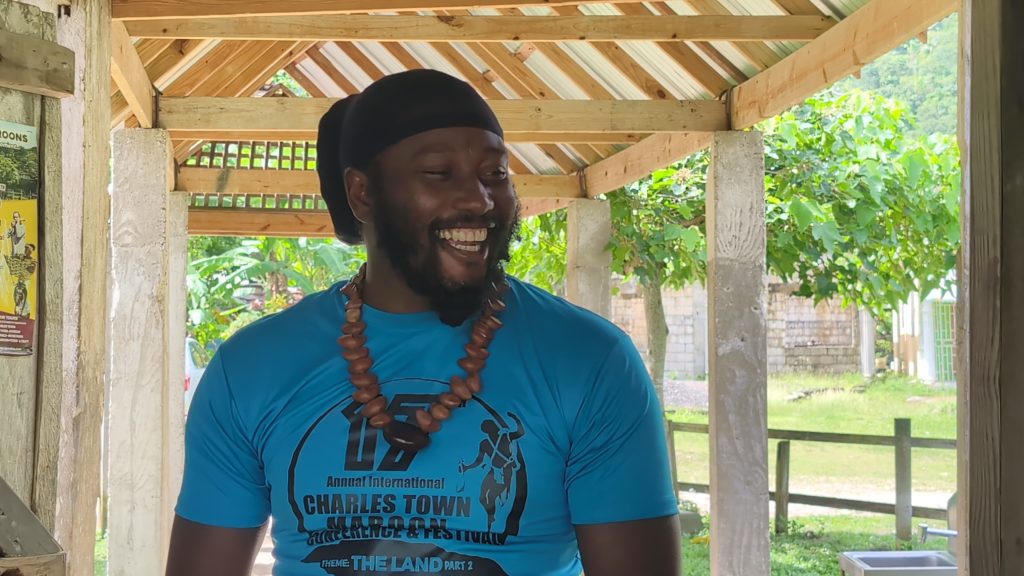
When I arrived at Charles Town, I was welcomed by the tour guide, Captain Padam. And from the first moment he started speaking, I knew this was going to be something different.
Captain Padam does not recite facts the way a textbook does. He carries his people’s story with a quiet, steady pride that gets into you. He is warm, deeply knowledgeable, and has this remarkable ability to make 300-year-old history feel like it happened last Tuesday and the community is still processing it together. His connection to this place is personal, and that comes through in every single word.
The Asafu Yard: Sacred Ground
Our first stop was the Asafu yard, and I want to make sure you understand what this space is before I describe it, because context matters here.
The Asafu yard is the sacred gathering space at the heart of the Charles Town community. This is where meetings are held, where ceremonies take place, where decisions about the community are made, and where the deep connections to African traditions are actively kept alive. But it is also something more. The Asafu yard was the space where Maroon warriors would spiritually reset after battle – a deliberate, intentional practice of not carrying the negative energy of war back into their homes and families. The Maroons understood something about mental and spiritual health that many modern communities are still figuring out.
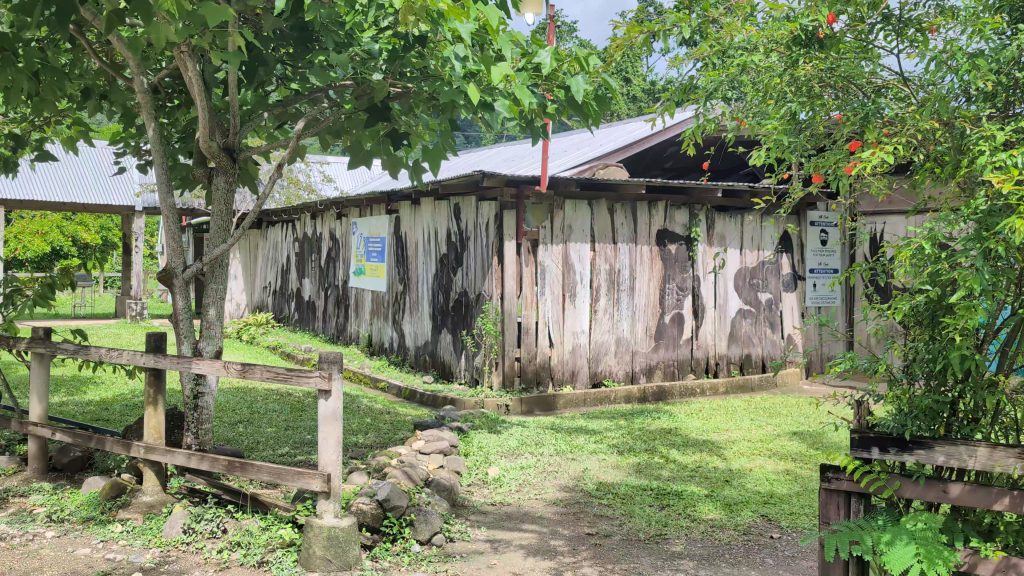
Standing in that yard, I felt the weight of that intention. The care that went into designing not just how they fought, but how they came home.
The Maroon Museum: History That Never Made It Into Your Textbooks
Next, we moved into the Maroon Museum, and this is where I spent the most time.
The museum is intimate. Personal. Real. The walls are covered with photographs, documents, artifacts, and stories that paint a vivid, layered picture of Maroon life – the resistance, the culture, the politics, and the heroes. I stood in front of several displays just reading, just absorbing. There is so much history here that never made it into the school curriculum I grew up with, and seeing it all laid out in front of me felt like finally being handed the complete story after years of getting only a chapter.
This is not a glossy, corporate museum experience. It is human. And that intimacy is exactly what makes it powerful.
If you are the kind of traveler who wants to actually understand the place you are visiting — not just photograph it — budget serious time for this museum. Go slow. Read everything. Ask questions.
When the Drums Started
And then the drumming began.
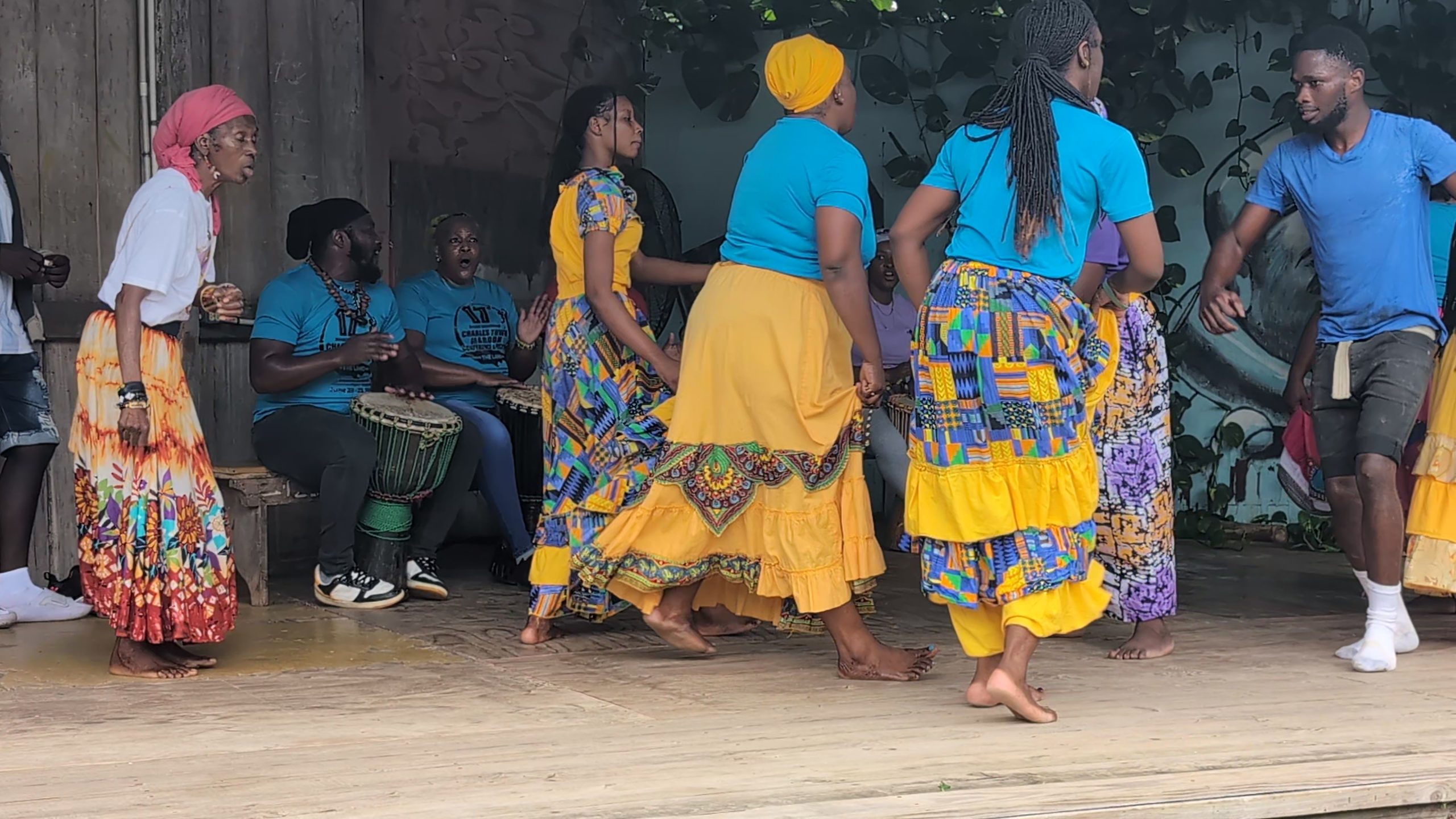
I am not exaggerating when I say the sound went straight through my chest. It was not just music. It was not performance in the way we usually think of that word. It was communication. It felt ancient and alive at the same time, like a memory my body recognized even though my mind had never heard it before.
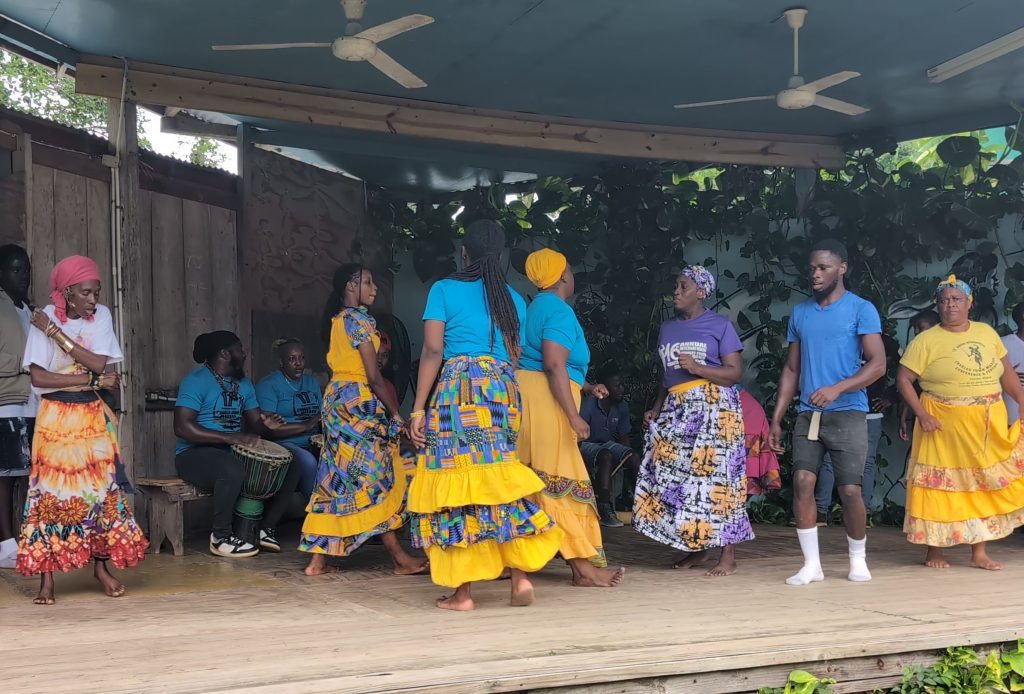
The Maroon drum tradition is not something that was revived for tourists. This is a continuous, unbroken practice. These rhythms have been passed down through generations, carrying meaning, carrying messages, carrying culture across centuries of pressure and change. When the dancers moved with a power and a grace that left absolutely no doubt about what this meant to them I found myself completely absorbed. Standing there with a ridiculous smile on my face, helplessly moving to music I had never heard before but somehow already knew.
That moment alone is worth the drive to Portland.
The Abeng: An Encrypted Communication System, Centuries Before Technology
Before leaving, I stopped at the Maroon craft store and picked up an Abeng. If you have never heard of one, let me introduce you to one of the most ingenious tools in Jamaican history.
The Abeng is a cow horn that the Maroons used to send messages across the mountains. They developed an entire communication system using the horn, specific signals and calls that could travel vast distances through the hills. British soldiers could hear the sound. They could never decode it. It was the Maroons’ encrypted communications system, built centuries before anyone invented radio, before anyone dreamed up a telephone, before cybersecurity was a word anyone knew.
I bought one. It is sitting on my shelf right now, and every time I look at it, I think about the genius of the people who created that system under impossible pressure, with their lives on the line.
This Is Not a Place Frozen in Time
Here is the thing that stayed with me most after leaving Charles Town, and the thing I most want you to understand before you visit.
The Maroons of Charles Town are not a chapter in a history book. They are not a preserved relic. They are a living, thriving, fully present community that is actively protecting their culture, their traditions, their language, and their land , right now, today, in 2026. The drumming continues. The Abeng still sounds across the hills. The Asafu yard still holds the community together. Captain Padam still walks visitors through a history that is also his personal inheritance.
That continuity, that fierce, deliberate determination to remain who they are across centuries of colonization, pressure, and change is the most powerful thing I witnessed at Charles Town. It is a masterclass in cultural preservation. And it puts a lot of things in perspective.
How to Plan Your Visit
Charles Town is located in Portland, Jamaica. The easiest base for a visit is Port Antonio, which is about a 30-minute drive away. If you are coming from Kingston, budget about two hours for the drive through the Mountains.
To book a tour, reach out directly to the Charles Town Maroon Council. Follow them on Instagram at @charlestownmarooncouncil for updates, event announcements, and a preview of the culture you are about to experience. Their page gives you a real sense of the community before you arrive.
The Bigger Picture
Portland has always held the quieter, deeper, more layered side of Jamaica. Between Charles Town, Fish Dunn Falls, Frenchman’s Cove, and the food scene in Port Antonio, this parish rewards the traveler who is willing to go a little further, ask a little more, and stay a little longer.
Charles Town is not optional for that kind of traveler. It is essential.
If you want to see more of the Jamaica that most tourists never find, the real Jamaica, the layered Jamaica, the Jamaica that will stay with you long after your flight home, then follow along with us. Visit uncoverja.com to explore our Portland tours and day trip options from Kingston, and subscribe to the Uncover Jamaica newsletter for weekly travel guides, hidden gems, and stories from across the island. You can also watch the full Charles Town video on the Uncover Jamaica YouTube channel at youtube.com/@UncoverJamaica.
Come ready to listen. Come ready to learn. Come ready to be moved in a way that a beach day simply cannot touch.